Shelly’s take · Why we chose this story
A true story, researched by hand and told with AI.
In brief
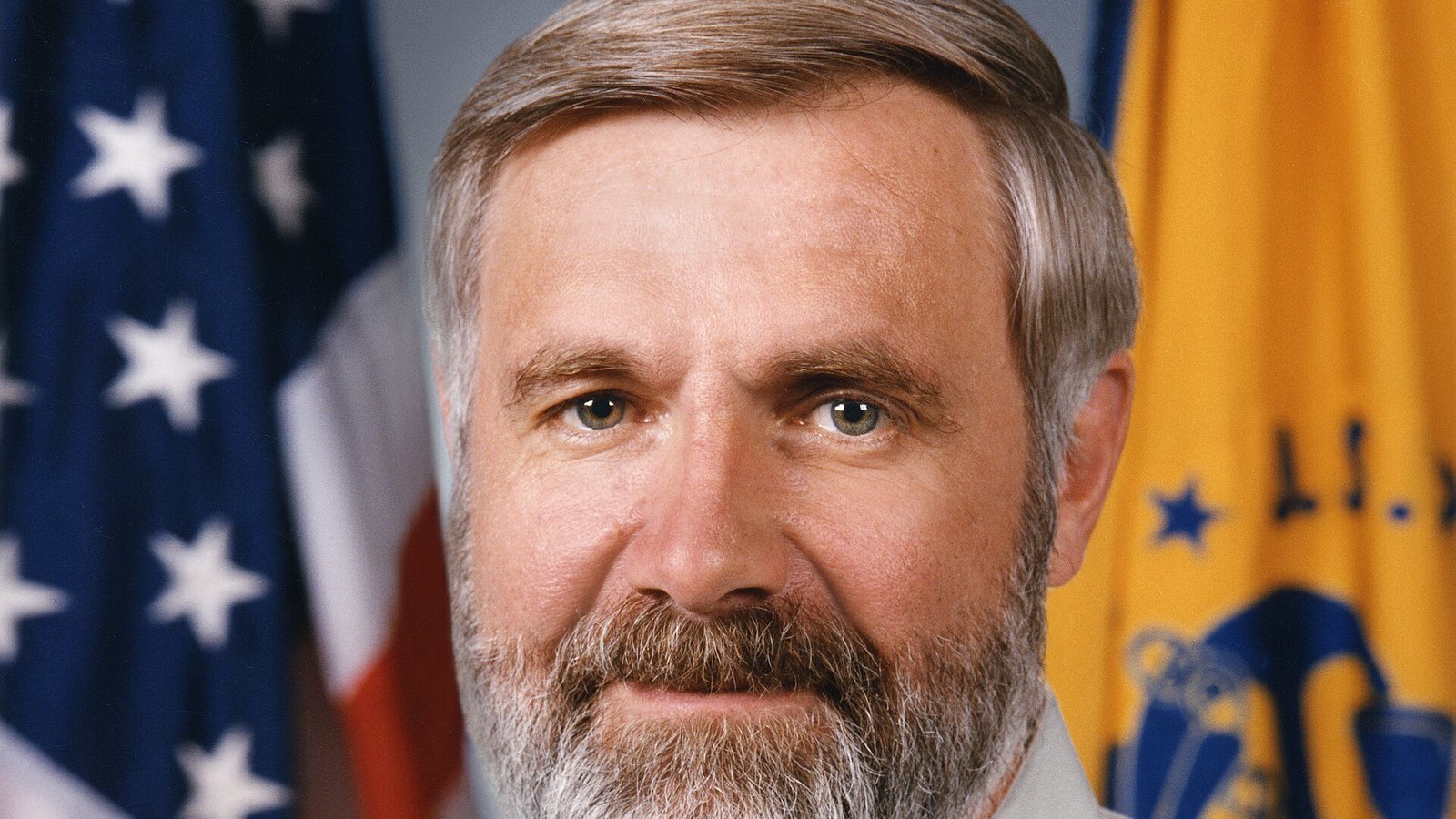
Who was William Foege?
In December 1966 Bill Foege, a young American doctor serving as a medical missionary in eastern Nigeria, was asked by the CDC to help with its smallpox campaign. The standard answer to an outbreak was to vaccinate everyone, and there was not enough vaccine. So he found the cases, by ham radio and by mapping market days, and vaccinated only the people each case could reach. The World Health Organization credits him with devising the global strategy that led to the eradication of smallpox.
The story in the curator’s words
Eastern Nigeria, 1966
Eastern Nigeria. December 1966. Word reaches a young American doctor working as a medical missionary. Smallpox, in a remote village you can only reach by bicycle. His name is Bill Foege. The CDC has asked him to help with its smallpox campaign.
The standard answer to an outbreak was to vaccinate everyone. That was the system. It assumed there would be enough vaccine. “We did not have enough vaccine to do this,” he said.
Where is the virus right now?
So he changed the question. Not who can we vaccinate. Where is the virus right now? He spread out maps. Every evening at seven, missionaries across the region checked in by ham radio, and by that night’s call they had found the cases. He studied the market days too, to see where the virus would travel next.
A ring of protection
Then he vaccinated only the people each case could reach. A ring of protection: about seven or eight percent of the area, not eighty. Two weeks later, they knew the outbreak was contained.
It took thousands of health workers to finish the job, in a global programme led at the World Health Organization by D.A. Henderson. But WHO credits Foege with devising the strategy that led to the end of smallpox. In 1980, the world was declared free of it.
Be good ancestors
He went on to lead the CDC, The Carter Center and the Task Force for Global Health. Bill Foege died on January 24, 2026, at eighty-nine. He left us an instruction: “Be good ancestors.”
This page asks nothing of Bill Foege’s family. The work carrying this story forward is the Task Force for Global Health, which he helped build, and the health workers who still find the case and protect the people around it. Amplifying him is how we keep that work in the light. That is the whole of what Creative House Studios does here: tell a true story with dignity, and point to the people still carrying its cause forward. Independent story; not affiliated with or endorsed by the Foege family, the CDC, Emory University or The Task Force for Global Health.
Carried forward today taskforce.org
Go to their work
The Task Force for Global HealthHe helped found it and led it. It works with partners worldwide to control and eliminate diseases, the work he spent his life on.Visit taskforce.org ↗Questions answered from the sources below
Questions about William Foege
Who was William Foege?
An American physician and epidemiologist (1936–2026). Serving as a medical missionary in Nigeria in 1966, he helped the CDC’s smallpox campaign and developed the find-the-case, ring-the-case approach. He later directed the CDC (1977–1983) and The Carter Center (1986–1992) and led the Task Force for Global Health. He received the Presidential Medal of Freedom in 2012.
What is ring vaccination?
Instead of vaccinating a whole population, health workers find each case quickly and vaccinate the people around it who could be exposed. In eastern Nigeria, vaccinating only about seven to eight percent of the area, rather than the eighty percent mass vaccination aimed for, stopped the outbreak.
Did he end smallpox by himself?
No. Thousands of health workers carried out the global programme, which D.A. Henderson led at the World Health Organization. WHO credits Foege with devising the strategy that led to eradication; the world was declared free of smallpox in 1980.
Sources 5 cited
Sources
- The Task Force for Global Healthfoundation · taskforce.org
- In memoriam: Dr William H. Foege, 1936–2026 (World Health Organization)reference · who.int
- Remembering William Foege, public health pioneer (Emory University, 2026)reference · news.emory.edu
- The world mourns the death of public health icon William Foege (CIDRAP, 2026)reference · cidrap.umn.edu
- Smallpox eradication: the 2001 Lasker Public Service Awardarchive · laskerfoundation.org