Shelly’s take · Why we chose this story
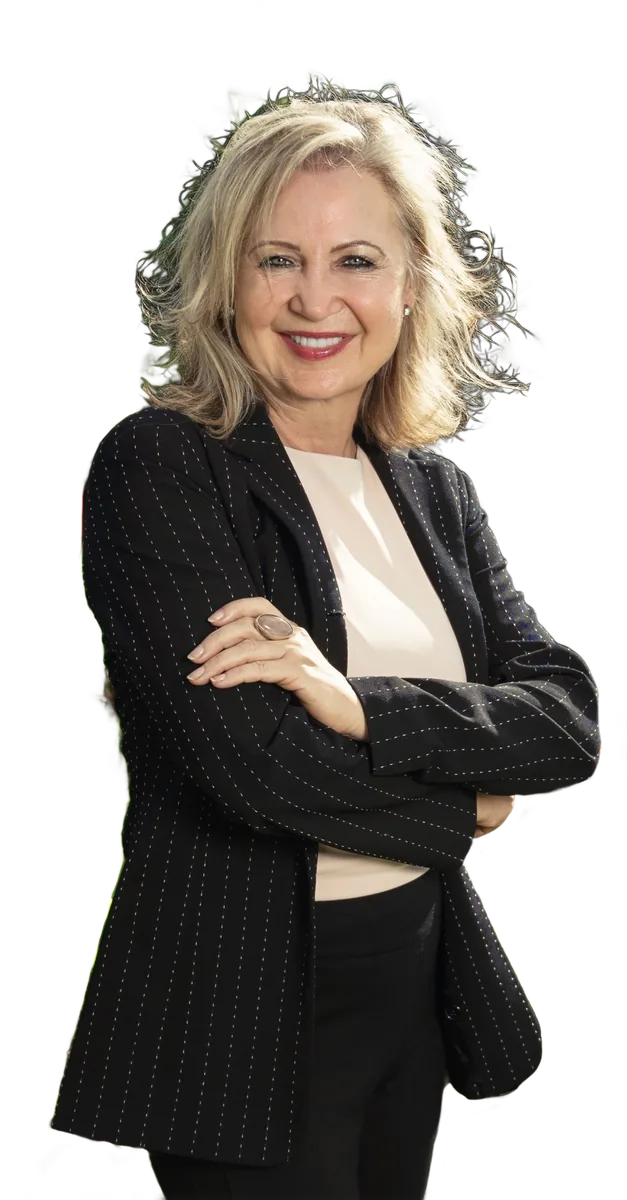 Coming soonShelly’s take · on Dr. Kelsey Leonard
In brief
Who is Dr. Kelsey Leonard?
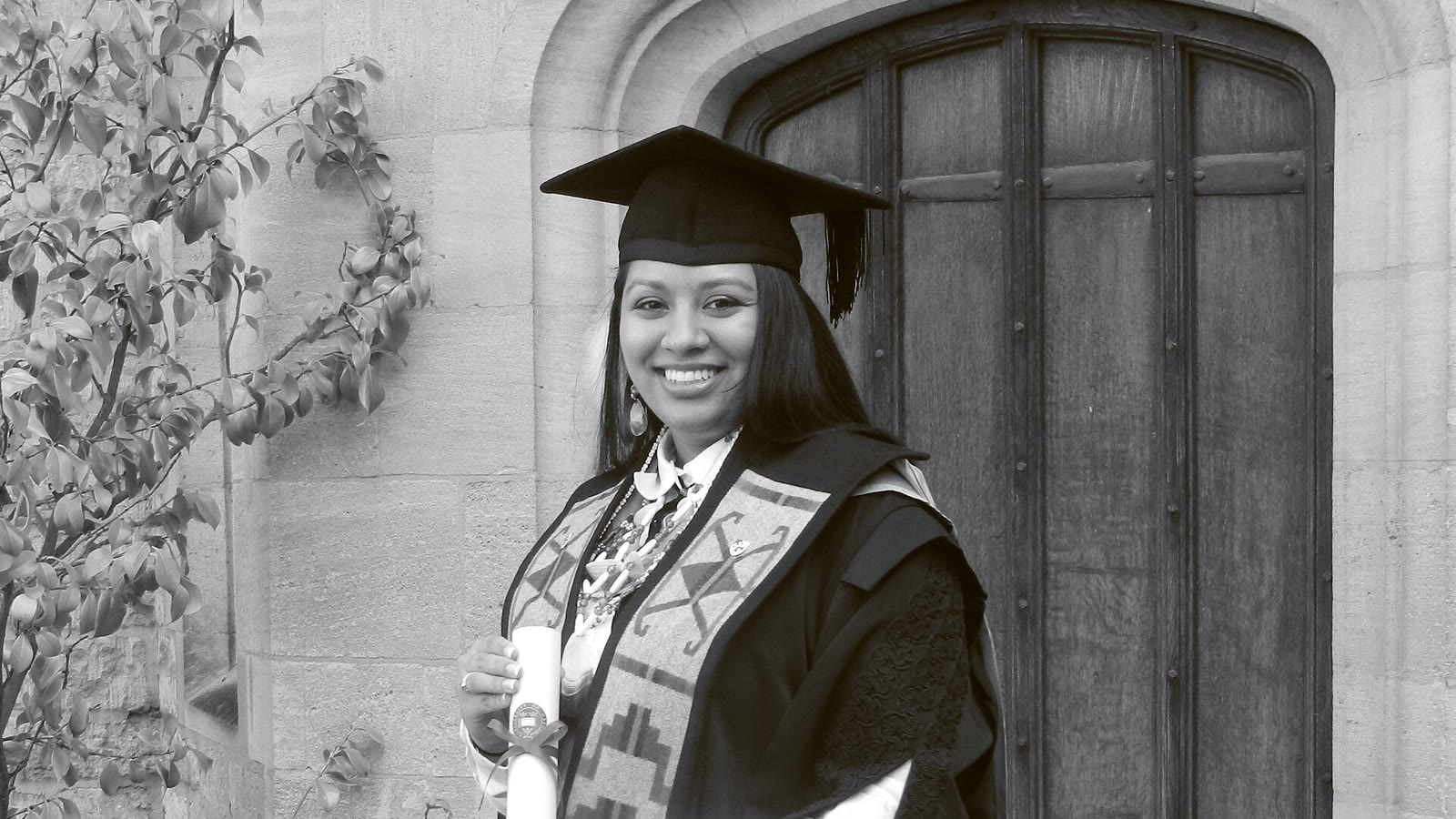
Kelsey Leonard is Shinnecock, from Long Island, people of the shore. She was taught that water is alive. At the University of Waterloo she founded the WAMPUM Lab, an Indigenous science lab for ocean, water and climate justice, and wrote the WAMPUM framework for coastal Tribal Nations facing rising seas. In 2026 the lab went mobile.
The story in the curator’s words
Palm Springs, 2019
Palm Springs, California. December 2019. Kelsey Leonard walks onto the TEDWomen stage carrying a vessel of water. She was taught, she says, that water is alive. “It can hear, it holds memories.”
She is an enrolled citizen of the Shinnecock Nation, whose homeland is on southeastern Long Island. People of the shore.
A mentor’s question
Her mentor was the late Josephine Mandamin, the Anishinaabe Grandmother Water Walker, who died in February 2019. Mandamin carried a prophecy of the Three Fires Midewiwin. In her own words: “an ounce of water will cost as much as an ounce of gold if we continue with our negligence.”
Leonard told her she felt that time had already come. Mandamin looked right back at her. “So what are you going to do about it?”
The WAMPUM Lab
Leonard’s answer was to build. At the University of Waterloo she founded the WAMPUM Lab, an Indigenous science lab for ocean, water and climate justice.
People of the shore
She wrote the WAMPUM Adaptation Framework (Climate and Development, 2021), a plan for eastern coastal Tribal Nations facing rising seas, grounded in Indigenous knowledge. Six principles: witness, acknowledge, mend, protect, unite, move. “We are people of the shore,” she says, “and if the shores cease to exist, we cease to exist.”
A lab on wheels
In 2026 the lab went mobile: the WAMPUM Mobile Lab, a retrofitted bus with wet and dry lab space, set to bring Indigenous-led science directly into communities.
Who is water?
Corporations can be legal persons, she argues. So why not the Great Lakes? Not what is water. Who is water?
This page asks nothing of Dr. Kelsey Leonard. The work carrying this story forward is the WAMPUM Lab and the coastal and Great Lakes Nations whose knowledge it is built on. Amplifying her is how we keep that work in the light. That is the whole of what Creative House Studios does here: tell a true story with dignity, and point to the people still carrying its cause forward. Independent story; not affiliated with or endorsed by Dr. Kelsey Leonard, the University of Waterloo or the family of Josephine Mandamin.
Carried forward today uwaterloo.ca
Go to their work
The WAMPUM Lab, University of WaterlooFounded and directed by Kelsey Leonard. In 2026 it took Indigenous-led science on the road in a mobile lab.Visit uwaterloo.ca ↗Questions answered from the sources below
Questions about Dr. Kelsey Leonard
Who is Dr. Kelsey Leonard?
An enrolled citizen of the Shinnecock Nation and a scholar at the University of Waterloo, where she founded and directs the WAMPUM Lab and holds the Canada Research Chair in Indigenous Waters, Climate and Sustainability.
What is the WAMPUM framework?
The WAMPUM Adaptation Framework, which she published as sole author in Climate and Development in 2021: sea-level-rise planning for eastern coastal Tribal Nations, grounded in their own knowledge, with six principles (witness, acknowledge, mend, protect, unite, move).
Did she win legal rights for the Great Lakes?
No source we read shows a law changed because of her work; it is an argument, still open. Her case, from the TED stage, is that if corporations can be legal persons, bodies of water like the Great Lakes should be able to be too.
Where do these facts come from?
Her 2019 TEDWomen talk and its transcript, her own bio, the Mother Earth Water Walk (Josephine Mandamin’s own words), the Canada Foundation for Innovation, Waterloo News and Eos.
Sources 7 cited
Sources
- Why lakes and rivers should have the same rights as humans (Kelsey Leonard, TEDWomen 2019)reference · ted.com
- Kelsey Leonard: bioreference · kelseyleonard.com
- Josephine Mandamin on water and the prophecy (Mother Earth Water Walk)reference · motherearthwaterwalk.com
- Should bodies of water have the same legal status as people? (Canada Foundation for Innovation, 2024)reference · innovation.ca
- WAMPUM: an Indigenous-designed path to sea level rise adaptation (Eos, 2021)reference · eos.org
- The WAMPUM Mobile Lab hits the road (Waterloo News, 2026)reference · uwaterloo.ca
- Kelsey Leonard named Canada Research Chair in Indigenous Waters (University of Waterloo, 2021)reference · uwaterloo.ca